Free tutoring where children try first and ask the AI second.

Our student tutors teach primary school children from underprivileged families across Hong Kong. Every subject is paired with AI, so the children leave with a free, patient study partner they can keep using.

Why we teach, and what's changed.

  1. What we noticed

    In Hong Kong, extra help after school usually costs money. Families who can pay for tutoring do, and families who can't watch their children fall behind. A patient AI tutor could change that, but only for children shown how to use it well.

    the next year

  2. 2024–2026

    What we did

    We trained 43 secondary-school tutors and taught four modules (maths, English, economics and science) in seven schools, every lesson built on Think First.

  3. Since 2024

    What changed

    86%

    of our students have moved up at least one class band since 2024.

    350 children taught · 7 schools · 43 trained tutors

    We don't claim that 86% as ours alone. Teachers, families and the students themselves did the work. But it's the number we hold ourselves to.

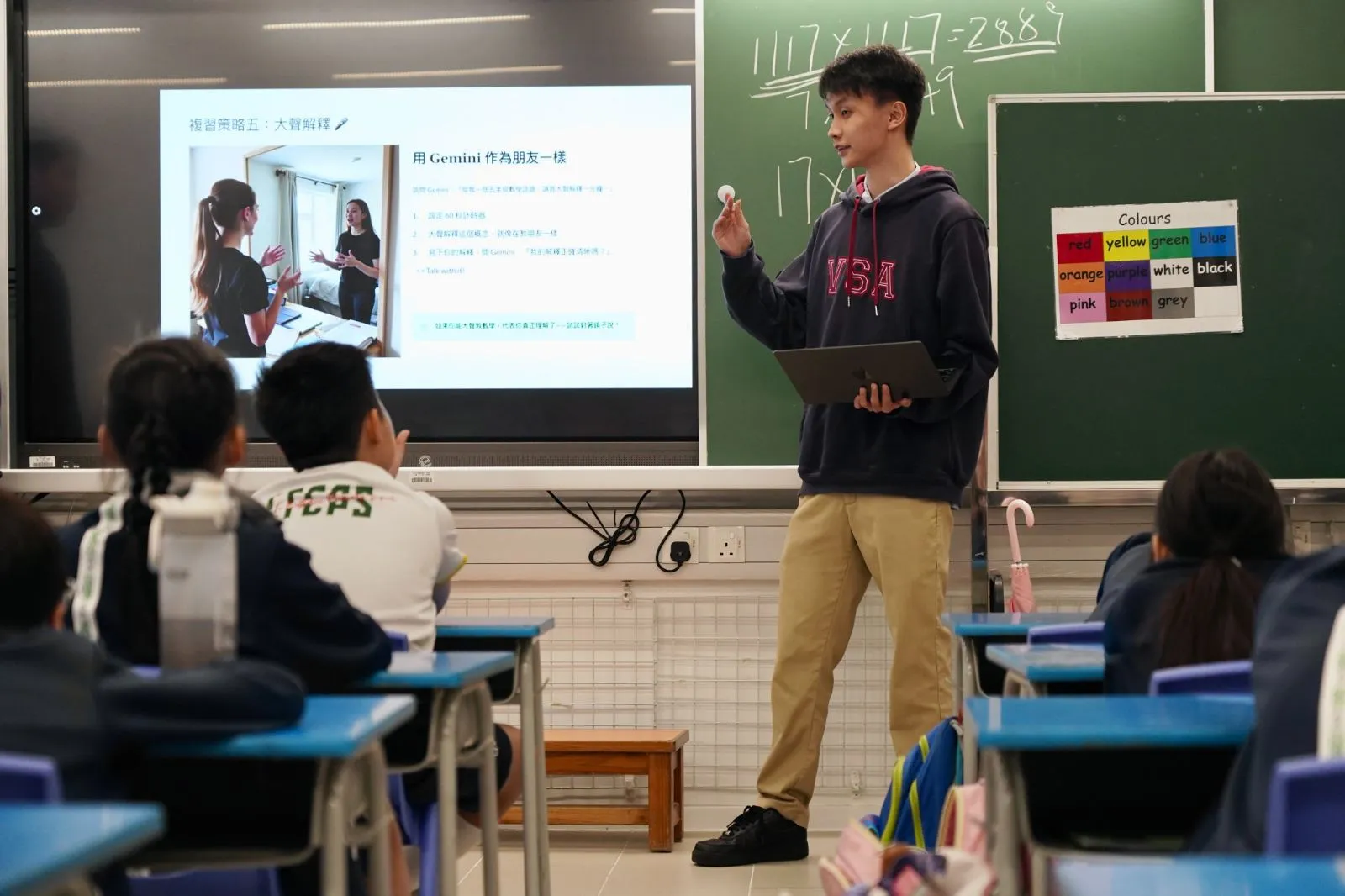
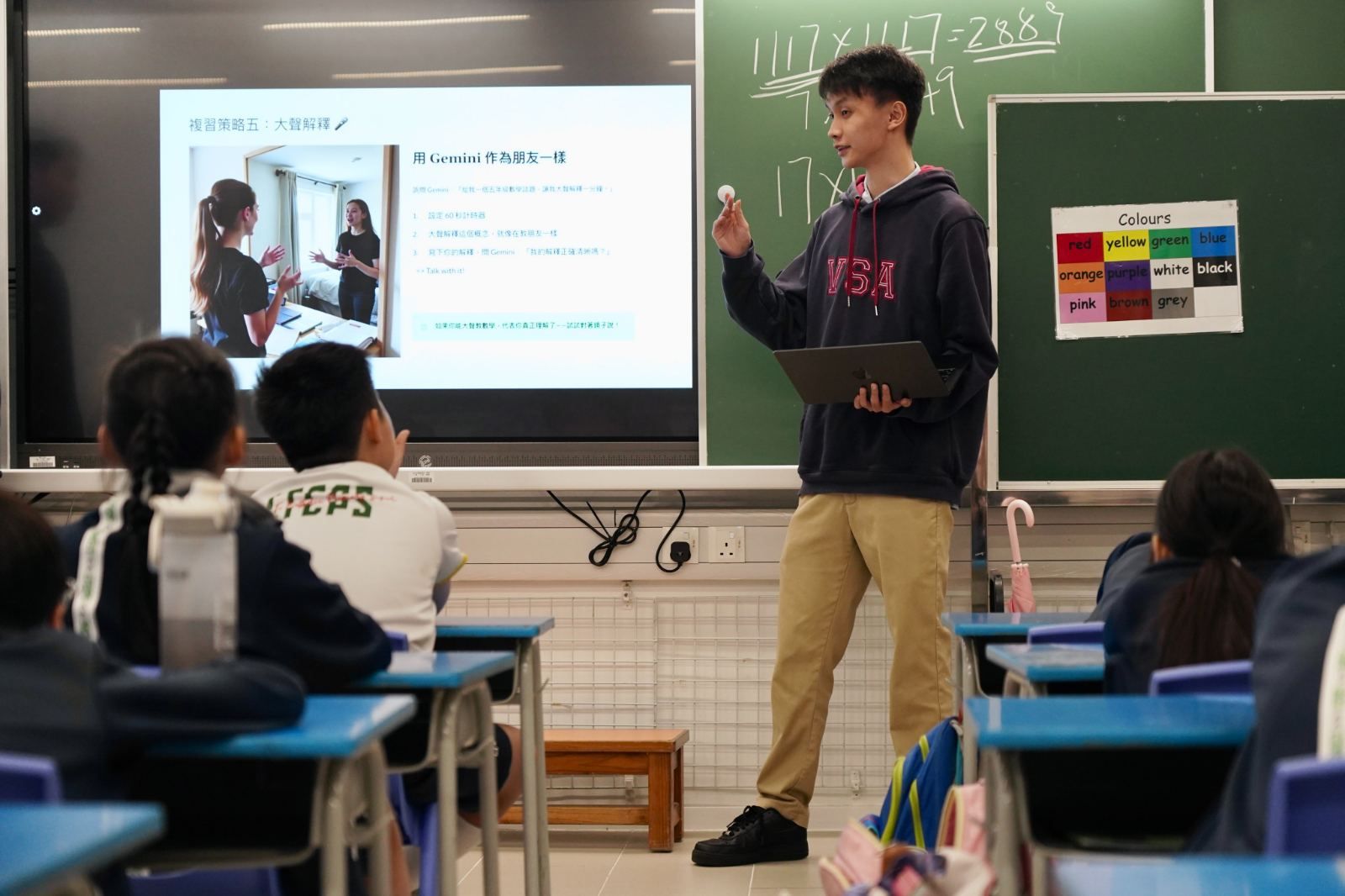
A tutor, laptop in hand, shows pupils how to explain a maths idea aloud to an AI to check they have understood it.
Explaining a maths idea aloud to an AI study partner, at Ho Man Tin Ling To Catholic School.

Why we teach

A free tutor for every child who can't afford one.

In Hong Kong, extra help after school usually costs money. Families who can pay for tutoring do, and families who can't watch their children fall behind. AI changes that. For the first time, a patient tutor that can explain a question five different ways is available for free.

But a tool is only as useful as a child's ability to use it well. A child who asks AI for the answer learns nothing. A child who tries first, asks for a hint, and then explains the answer in their own words learns more than they would have on their own. Teaching that difference is what our tutors do.

A moment from class

We went to Ling To expecting to spend the session convincing a room of children that AI and current affairs had anything to do with them. We were wrong. They weren't uninterested; nobody had ever given them the chance. Within an hour they were arguing about whether an algorithm could be fair. Curiosity was never what was missing. Access was.

One of our tutors, after a session at Ho Man Tin Ling To Catholic School

How we teach: Think First

Every lesson follows the same four steps.

Every lesson that uses AI follows the same four steps.

  1. Attempt

    Children try the problem on their own first.

  2. Ask

    They ask the AI for a hint or a check, never for the answer.

  3. Check

    They compare the AI's reply with their own work and spot the differences.

  4. Explain

    With the AI switched off, they explain the answer in their own words.

This is the worksheet from one of our lessons, where children compare two characters from a game they play, then argue which is better.

Worksheet

My two characters

CharacterDamage per shotShots per secondDamage per second

Make the case

  • I think is better because .
  • The evidence is .
  • Someone might choose instead, because .
  • Even so, I would recommend because .
  1. They read the numbers from their own game, so the data is theirs.
  2. The surprise: the faster character usually wins. One number on its own doesn't tell you much.
  3. One honest sentence for the other side. It's the same rule we use in every proposal.

If a child can explain it without the AI, they've learned it. If they can't, we go back a step.

We don't teach AI as a separate topic. We teach maths, English, economics and science, and show children how AI can help them learn each one. Our tutors are secondary school students who finish AFG's training before they teach, and they work in small groups so every child gets attention.

Our four modules

Four school subjects, each with AI as a study partner.

Each module pairs a school subject with AI. The aim is to close the gap between our students and children from better-off families, not to widen it.

  • Mathematics & AI

    We use AI to make abstract maths something children can see and poke at. Students build a simple model that fits a line to some data, so slope, gradient and optimisation stop being words in a textbook. They use an AI tutor for step-by-step explanations at their own level, the kind of one-to-one help that usually costs money. We also teach them to check the AI’s working, and catching its mistakes turns out to be a great way to learn the maths.

    How it helps: It gives a child who could never afford a private maths tutor something close to one.

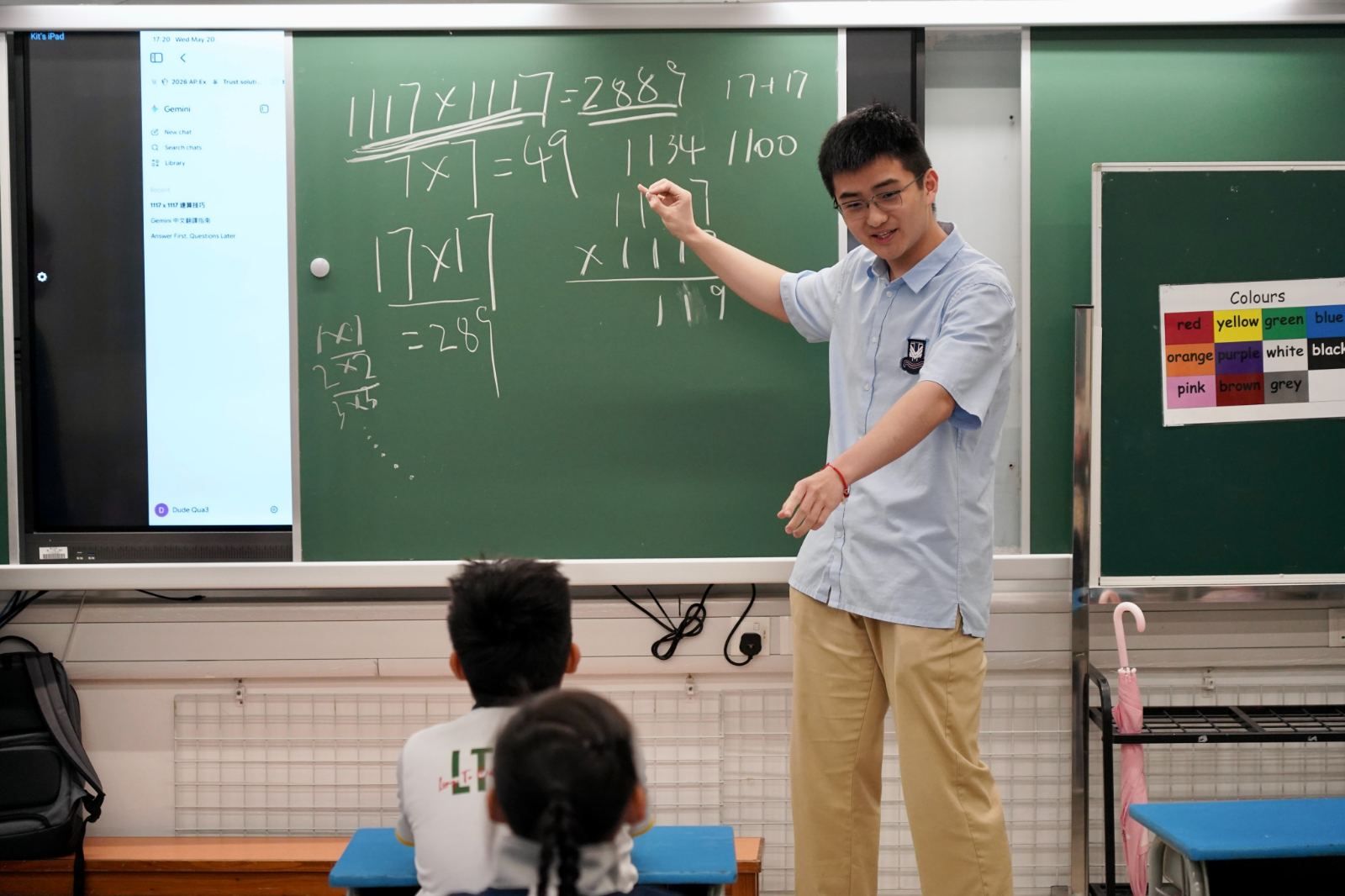
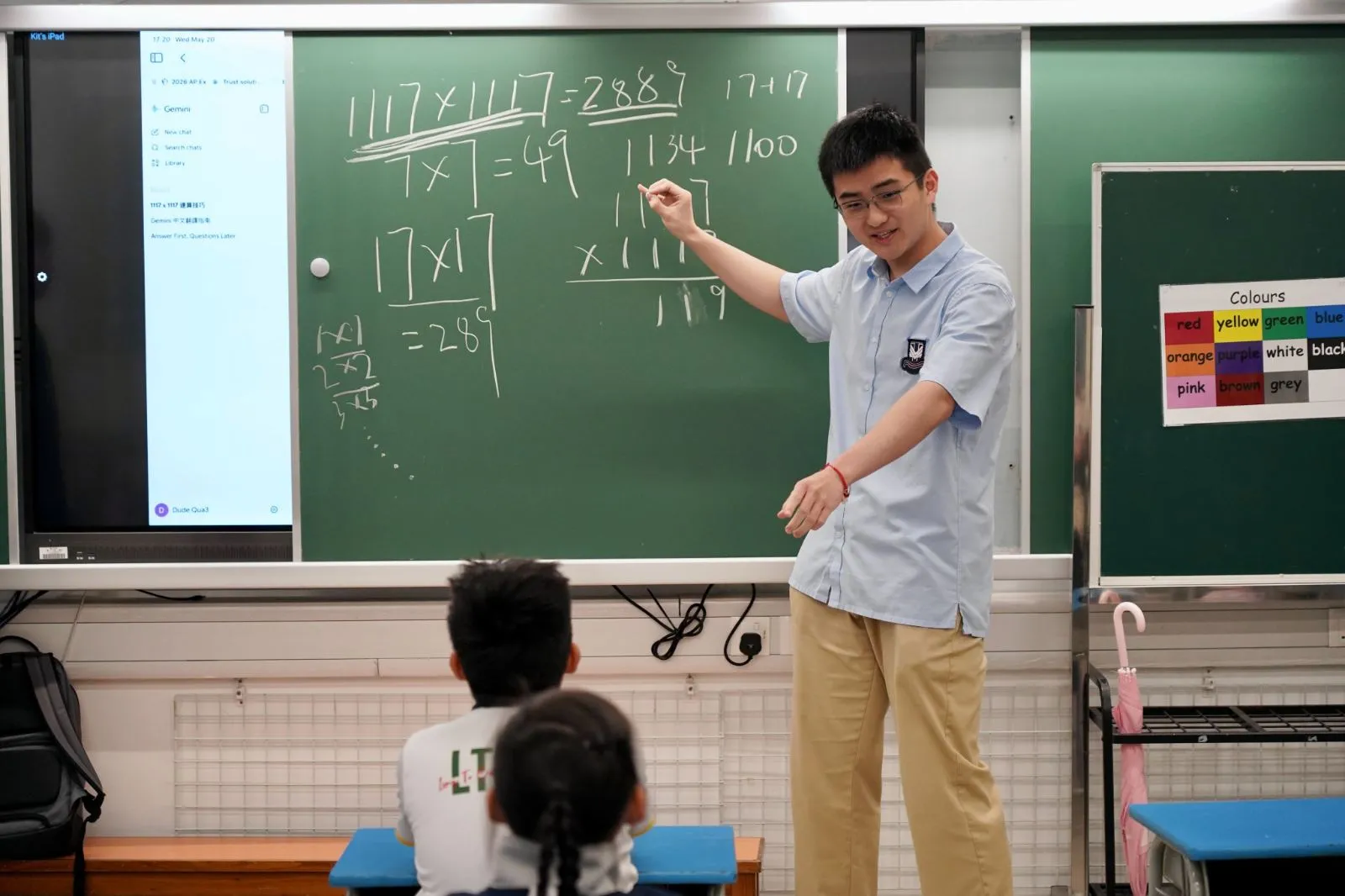
    A tutor works through a mental-arithmetic shortcut for 1117 × 1117 on the chalkboard.
  • English & AI

    Students use AI as a writing partner: they draft, ask for feedback and revise. Just as importantly, we teach them to question what the AI writes, spotting weak arguments, mistakes and bias. That builds the close reading and critical thinking that children from better-off families often pick up from tutors and conversations at home. For children learning English as a second language, an AI partner also means unlimited practice without anyone laughing at their mistakes.

    How it helps: Patient feedback and plenty of English practice, for children who don't get either at home.

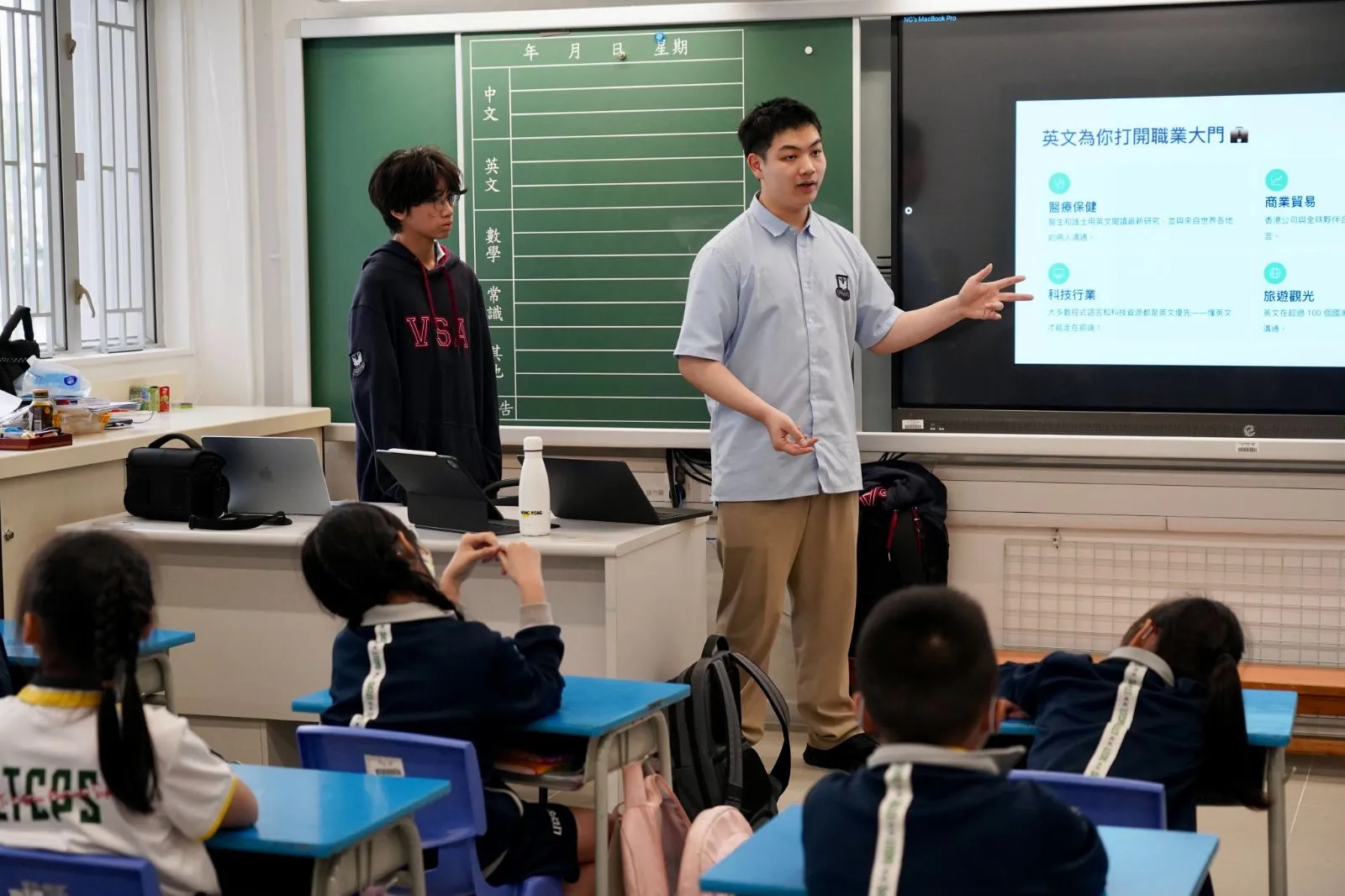
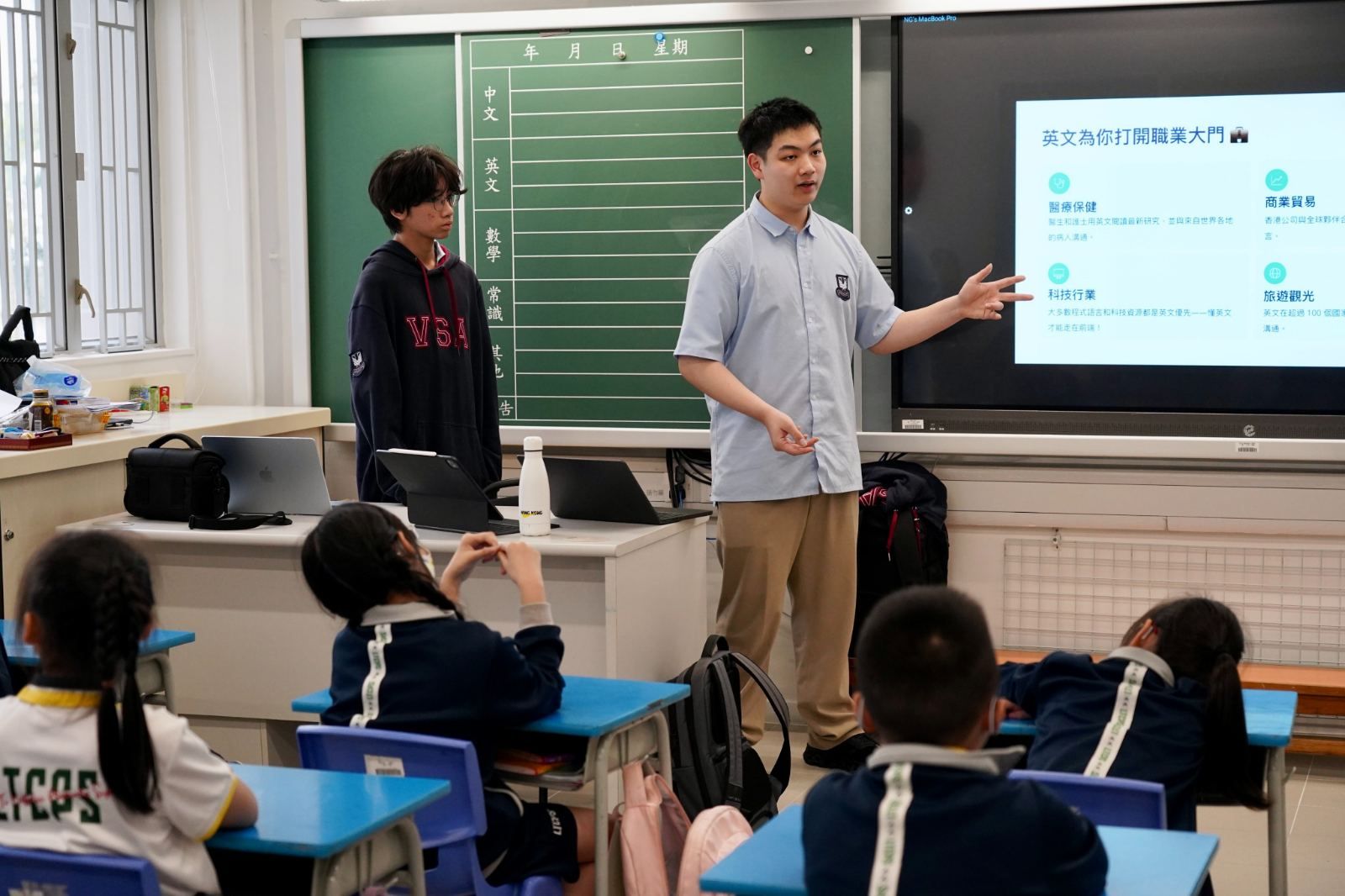
    Two tutors run the English module, with a slide on how English opens career doors in healthcare, trade, technology, and tourism.
  • Economics & AI

    Students use AI to understand the economy of their own city. They look at real Hong Kong data on housing costs, wages and inequality, with AI helping them search it and turn it into charts. Ideas like supply and demand, opportunity cost and the wealth gap become questions about their own neighbourhood. They also run simple AI-assisted simulations to see how prices and incentives affect each other.

    How it helps: Understanding money and the economy is an advantage in itself, and most of these children have nobody at home to pass it on.

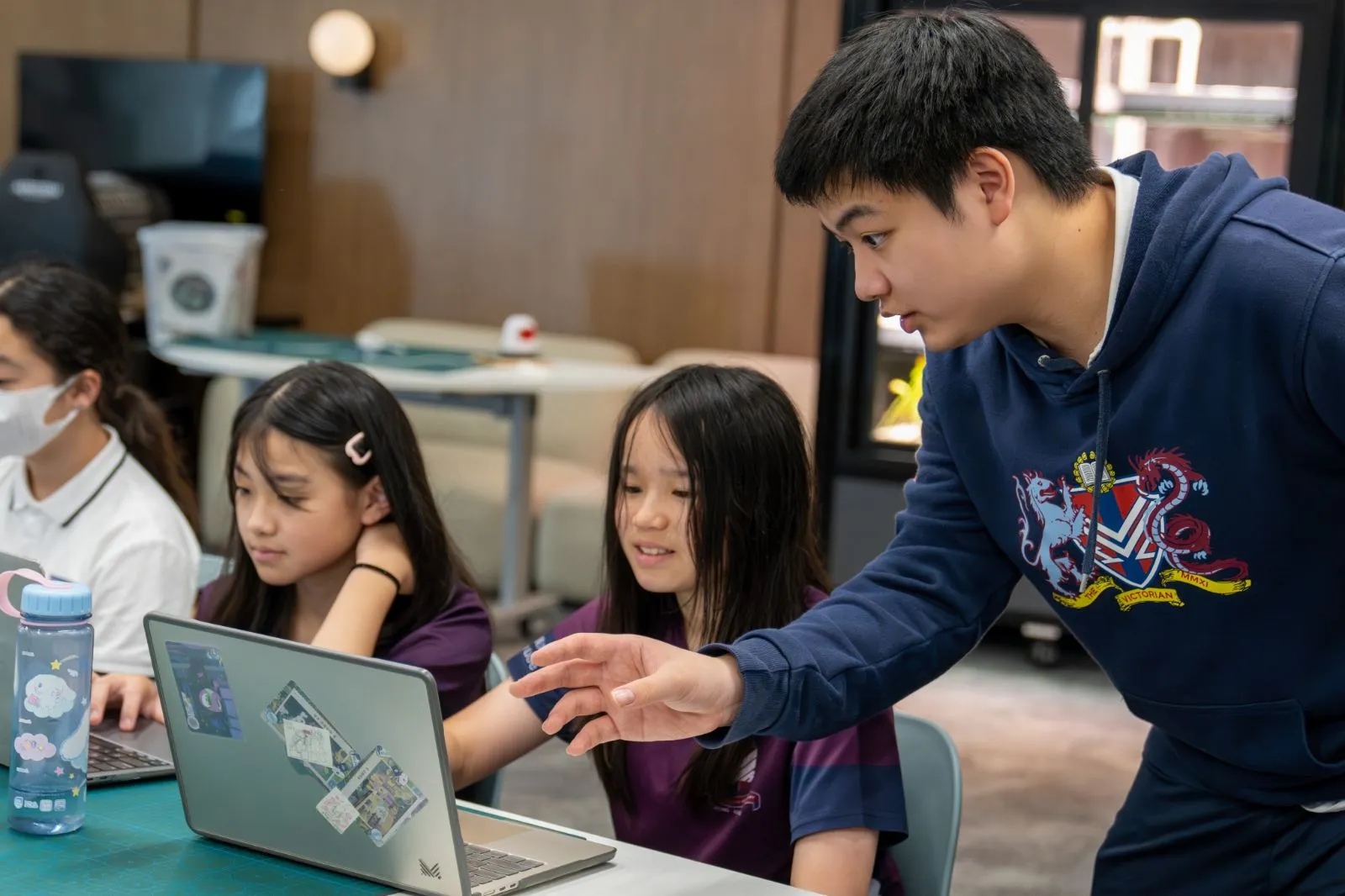
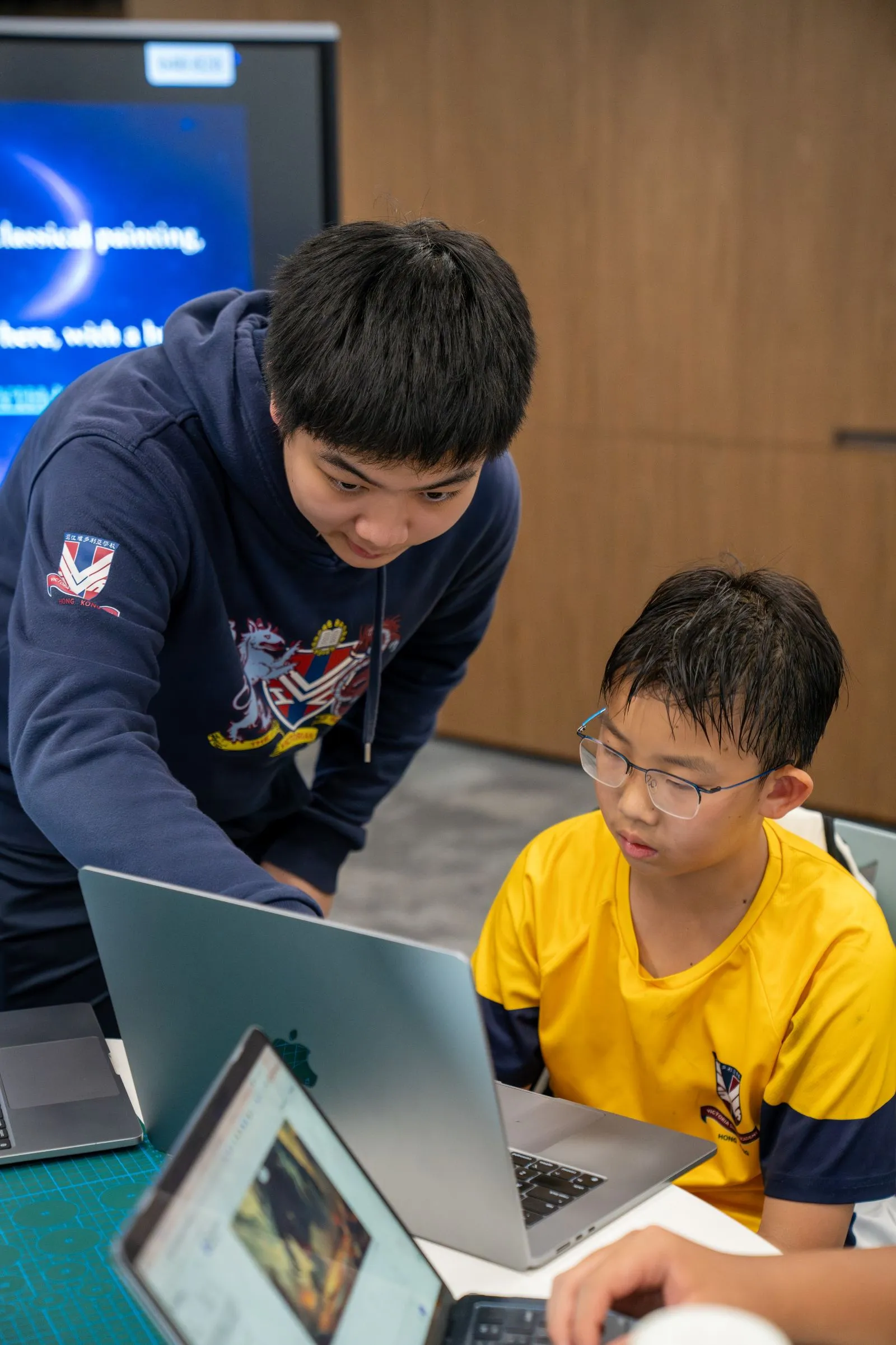
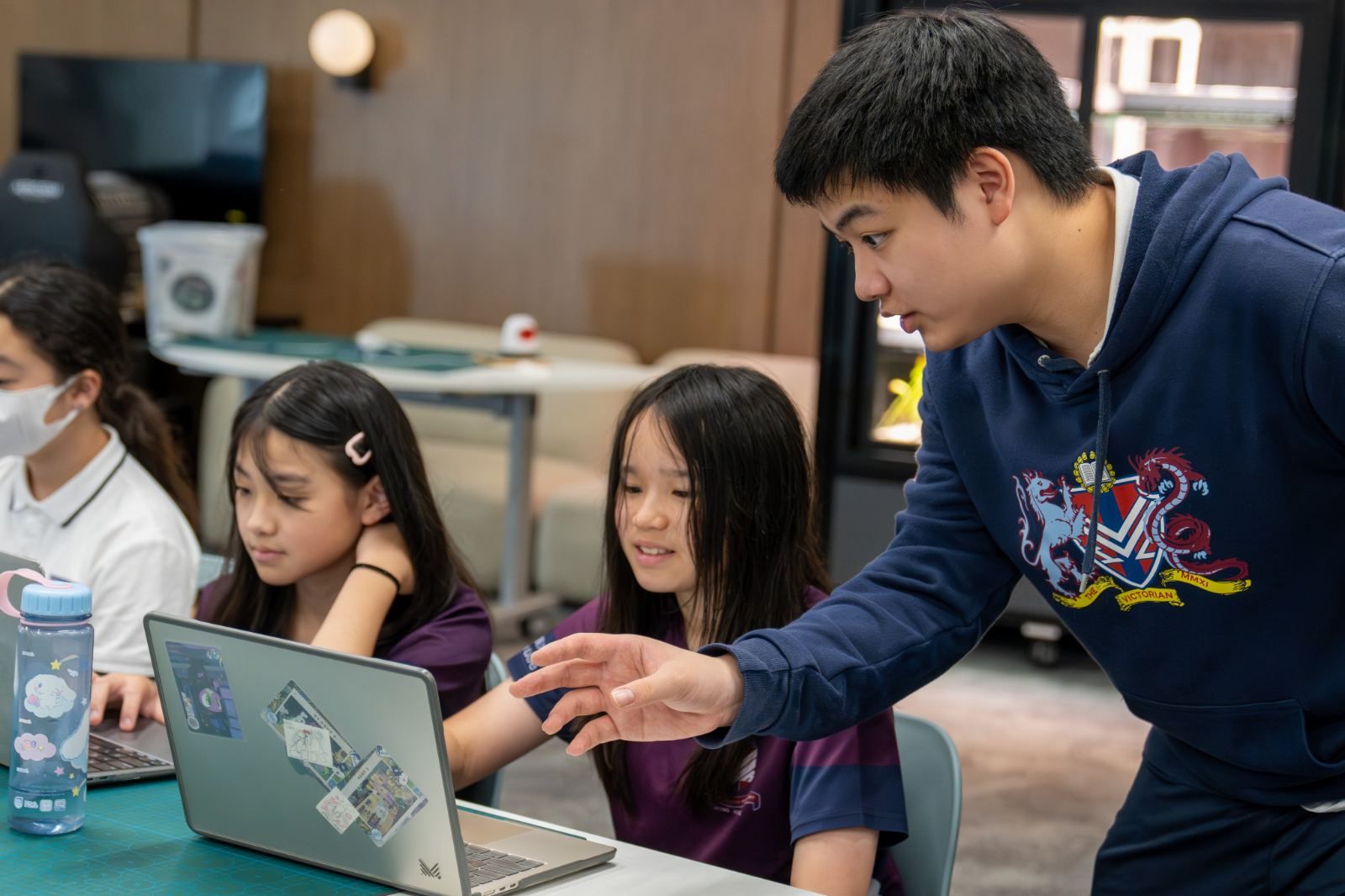
    A tutor leans in to help two students working together at a laptop.
  • Science & AI

    Students use AI simulations to run experiments their schools can’t afford the equipment for, like projectile motion, circuits and chemical reactions. They try image-recognition tools to see how machines “see” the world. They also learn where AI models get things wrong and where simulations stop matching reality, which is real scientific thinking.

    How it helps: A borrowed phone becomes a science lab, so the gap in lab equipment between well-funded and under-funded schools matters a little less.

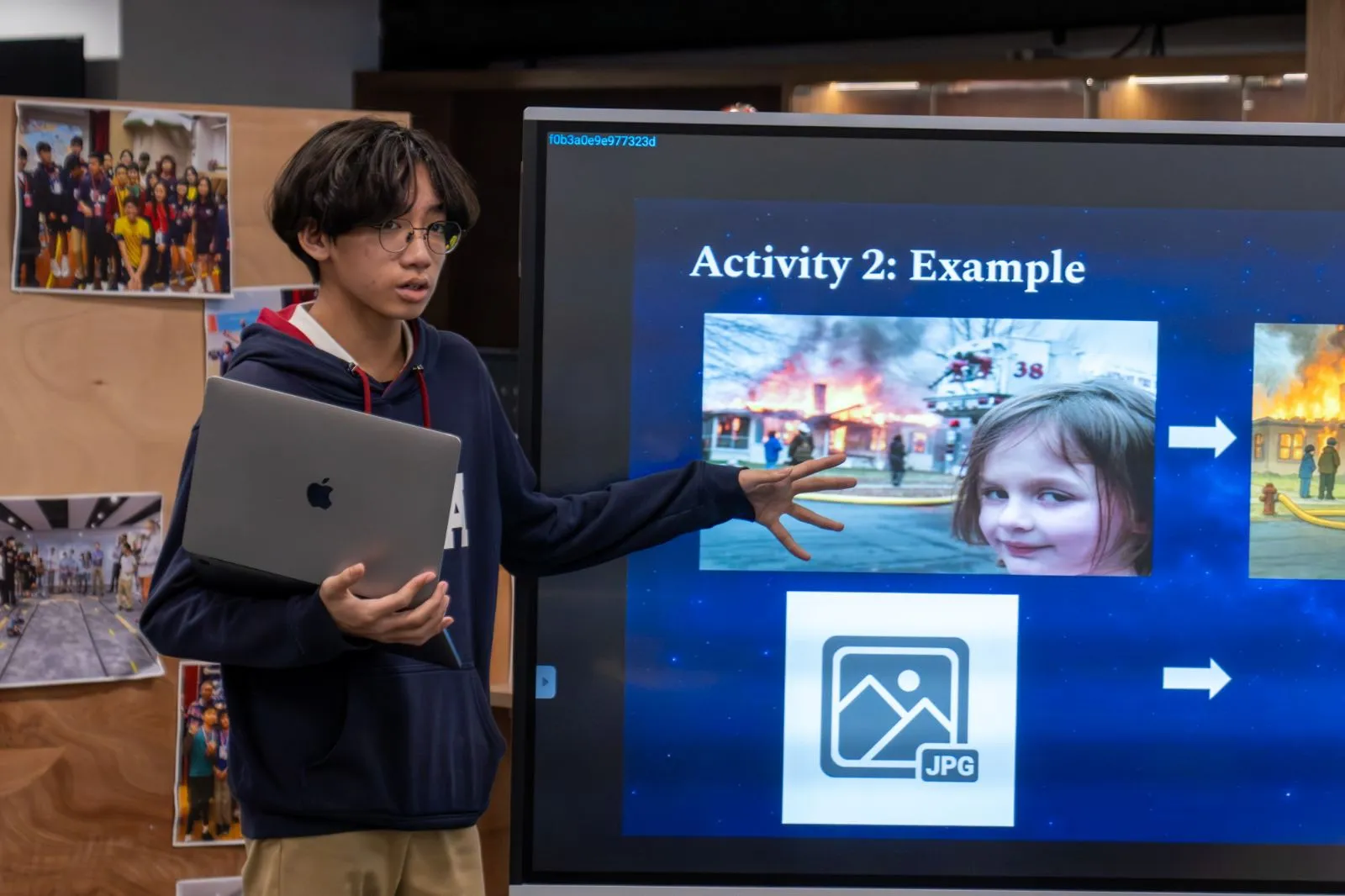
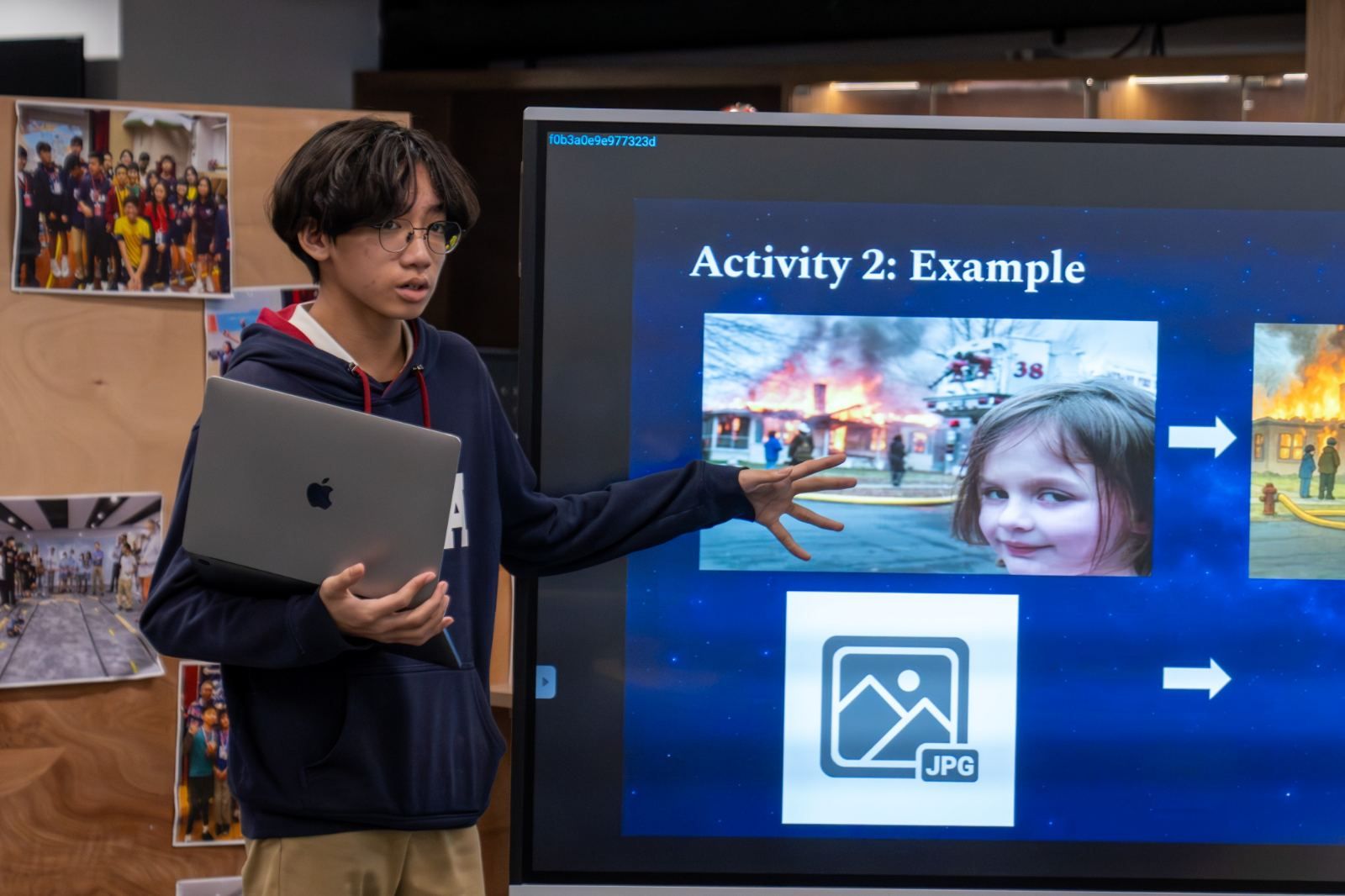
    A tutor presents a worked example on screen, showing how an AI image tool transforms one picture into another.

Sample lesson

Bigger isn't better

One lesson, using the Mathematics and English modules above. We've published it so schools can see how a lesson is put together before they invite us in.

  • LevelP5–P6
  • Length60 minutes
  • Staffing2 tutors for every 8–10 students

The lesson on its own page, with a worksheet to print

Part 1 · Maths · 30 min

Bigger isn't better

Objective Students work out a rate and explain why a bigger single number can still lose to a smaller one.

Each student picks two characters they actually play in Brawl Stars and reads the damage per shot and reload speed from their own screen. They almost always pick one slow, heavy hitter and one fast, weaker one, and they almost always assume the bigger number wins.

Then they work out the damage per second, and the faster character usually comes out ahead. That surprise is the lesson: one number on its own doesn't tell you much, and the number that matters is usually a rate.

Then the twist: the faster character can only hit enemies standing close by. Is it still the better choice? Now the answer depends on how you play, and that's what Part 2 is for.

Extension How much would the reload speed have to change for the answer to flip? It's their first go at solving for an unknown, and they get there because they're curious, not because a textbook told them to.

Watch for Students who get the sums right but can't explain why the answer surprised them. The explanation is the goal; the multiplication is just how we get there.
Part 2 · English · 30 min

Make the case

Objective Students write a short argument with a claim, evidence, a fair version of the other side, and a recommendation.

They argue which of their two characters is better, using the numbers they just worked out as evidence. There's one firm rule: they have to write one honest sentence about why someone might reasonably pick the other character. If they can't, they don't fully understand their own argument yet.

Sentence starters go on the board for children learning English as a second language:

  • I think ______ is better because ______.
  • The evidence is ______.
  • Someone might choose ______ instead, because ______.
  • Even so, I would recommend ______ because ______.

Then they follow the Think First steps. Each student asks an AI tool to check their calculation and give one hint to strengthen their argument, and decides for themselves whether the feedback is right. Finally, with the AI closed, they explain their recommendation to the group in their own words.

Four or five sentences is a finished piece. Two or three students read theirs out, and everyone else's job is to spot the counterargument, not to decide who won.

Watch for A counterargument that's really a put-down, like "someone might choose it because they're bad at the game." Send it back. Learning to describe the other side fairly is the whole point.

Claim, evidence, an honest case against, then a recommendation: it's the same structure we use in every proposal we send to the government. We teach eleven-year-olds the same method we use with policymakers.

It goes the other way too. Our December 2025 proposal, Think First, takes the method our tutors use every week and proposes it for every primary school in Hong Kong.

Where we teach

We teach in seven schools, including Ho Man Tin Ling To Catholic School and Kennedy Town School, and with our community partners St. Barnabas' Home & Society and 10% Organisation.

Our promises to schools and families

What schools and families can count on.

  • Tutors always teach with a member of school or centre staff in the room.
  • We don't collect children's personal data.
  • We only use AI tools the partner school has approved.
  • Teaching is always free.

In the classroom

Our tutors teaching at Ho Man Tin Ling To Catholic School.

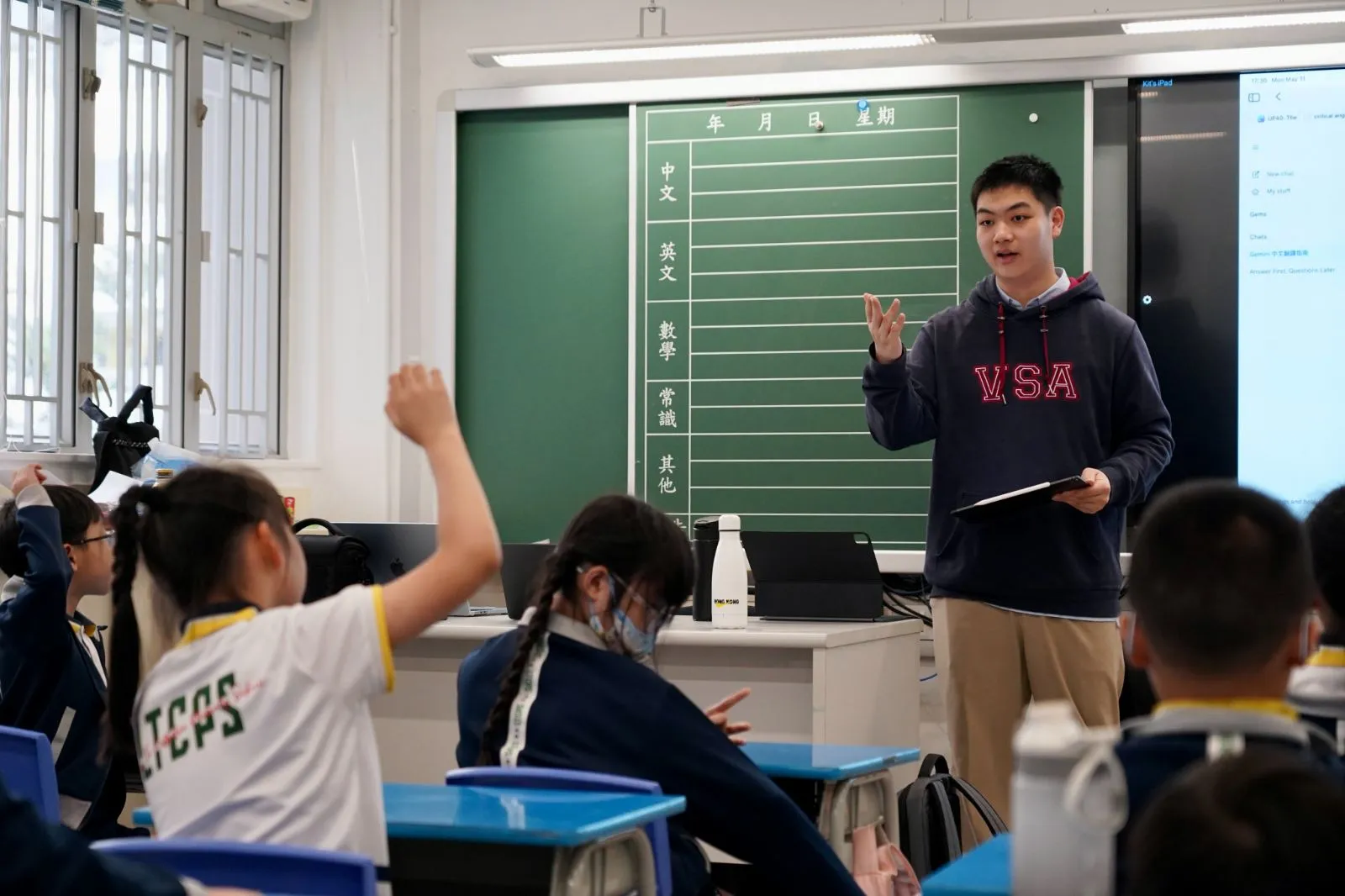
  • A tutor leads a session at Ho Man Tin Ling To Catholic School while a pupil raises her hand to answer.
  • A tutor works through a mental-arithmetic shortcut for 1117 × 1117 on the chalkboard.
  • A tutor, laptop in hand, shows pupils how to explain a maths idea aloud to an AI to check they have understood it.
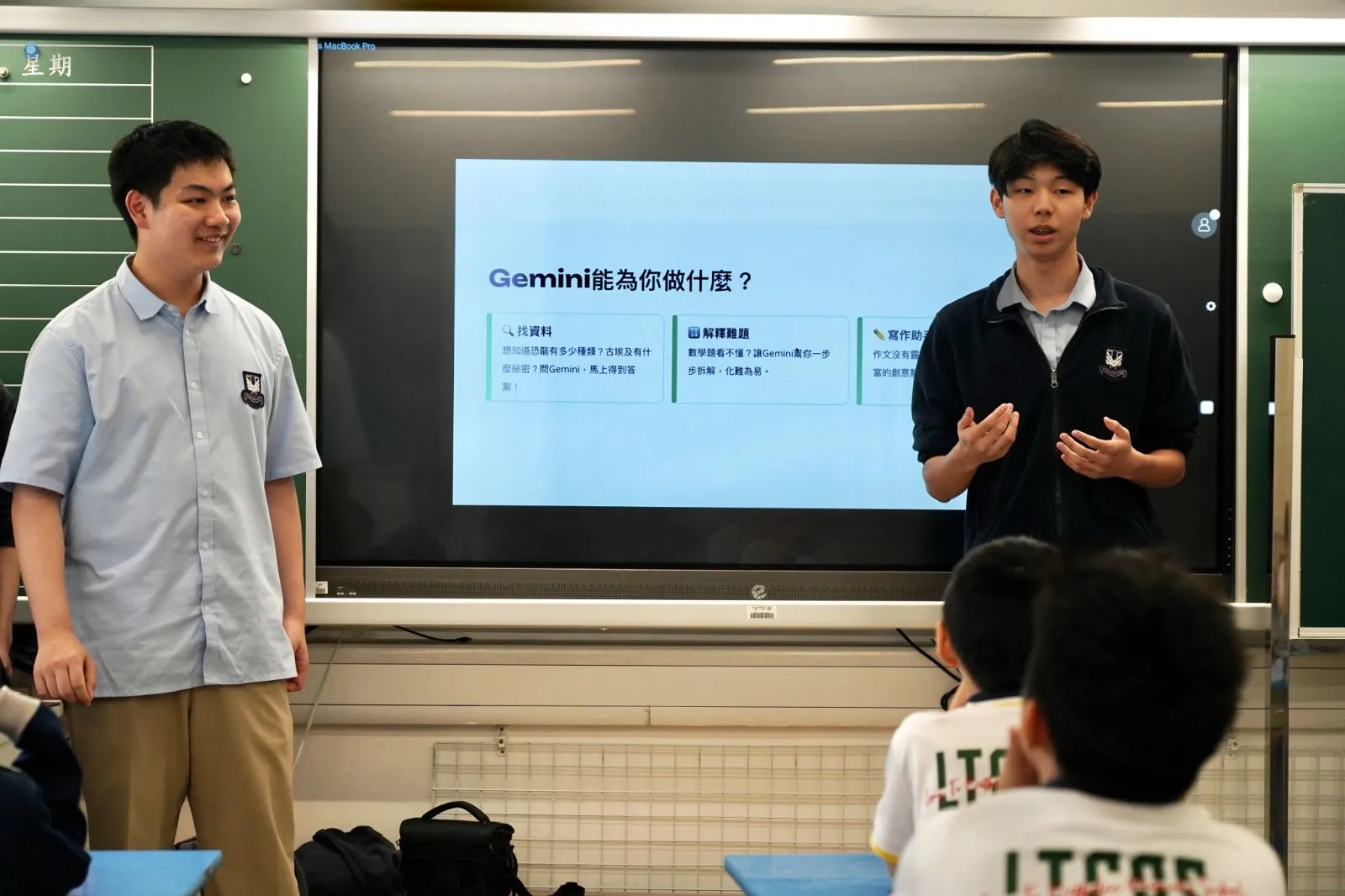
  • Two tutors introduce what an AI assistant can do: find information, break down hard questions, and help with writing.
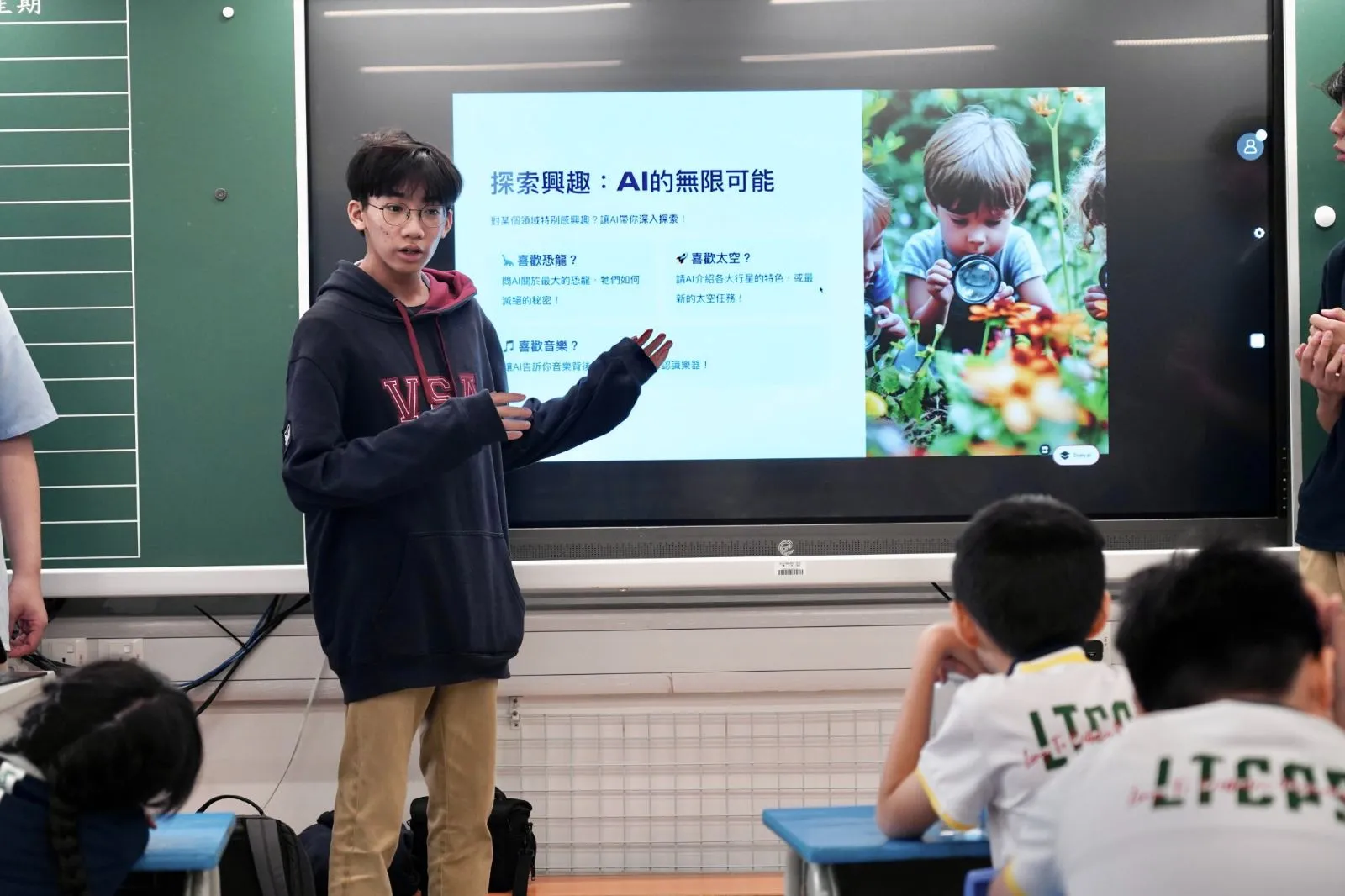
  • A tutor shows pupils how to use AI to explore their own interests, from dinosaurs to space to music.
  • Two tutors run the English module, with a slide on how English opens career doors in healthcare, trade, technology, and tourism.

With Victoria Shanghai Academy

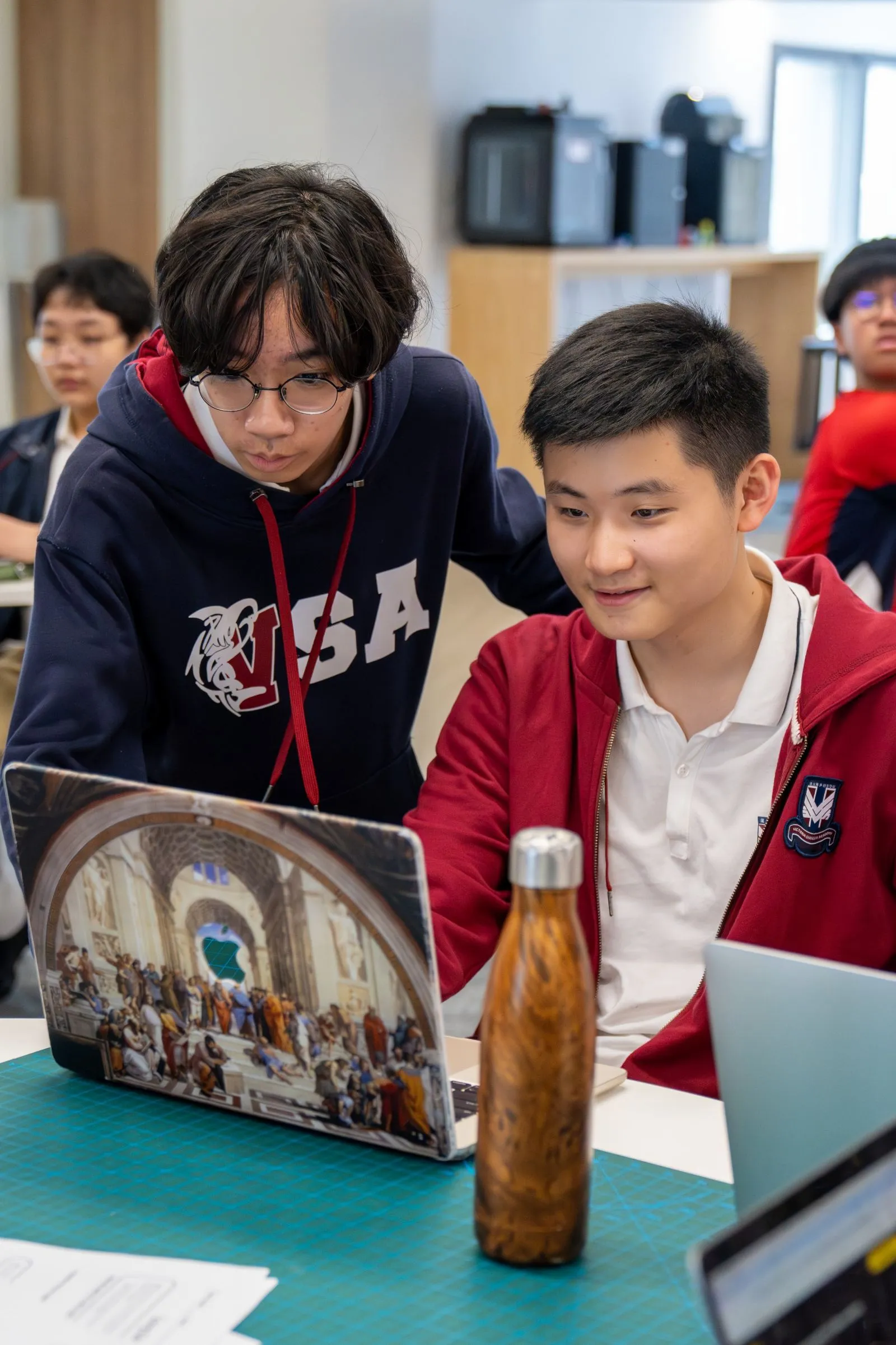
Alongside our work in primary schools, we run sessions with Victoria Shanghai Academy for young people from the local community.

2024–25

Showing students how AI can be used in their own community: what the tools are good at, and how to use them for something that actually helps.

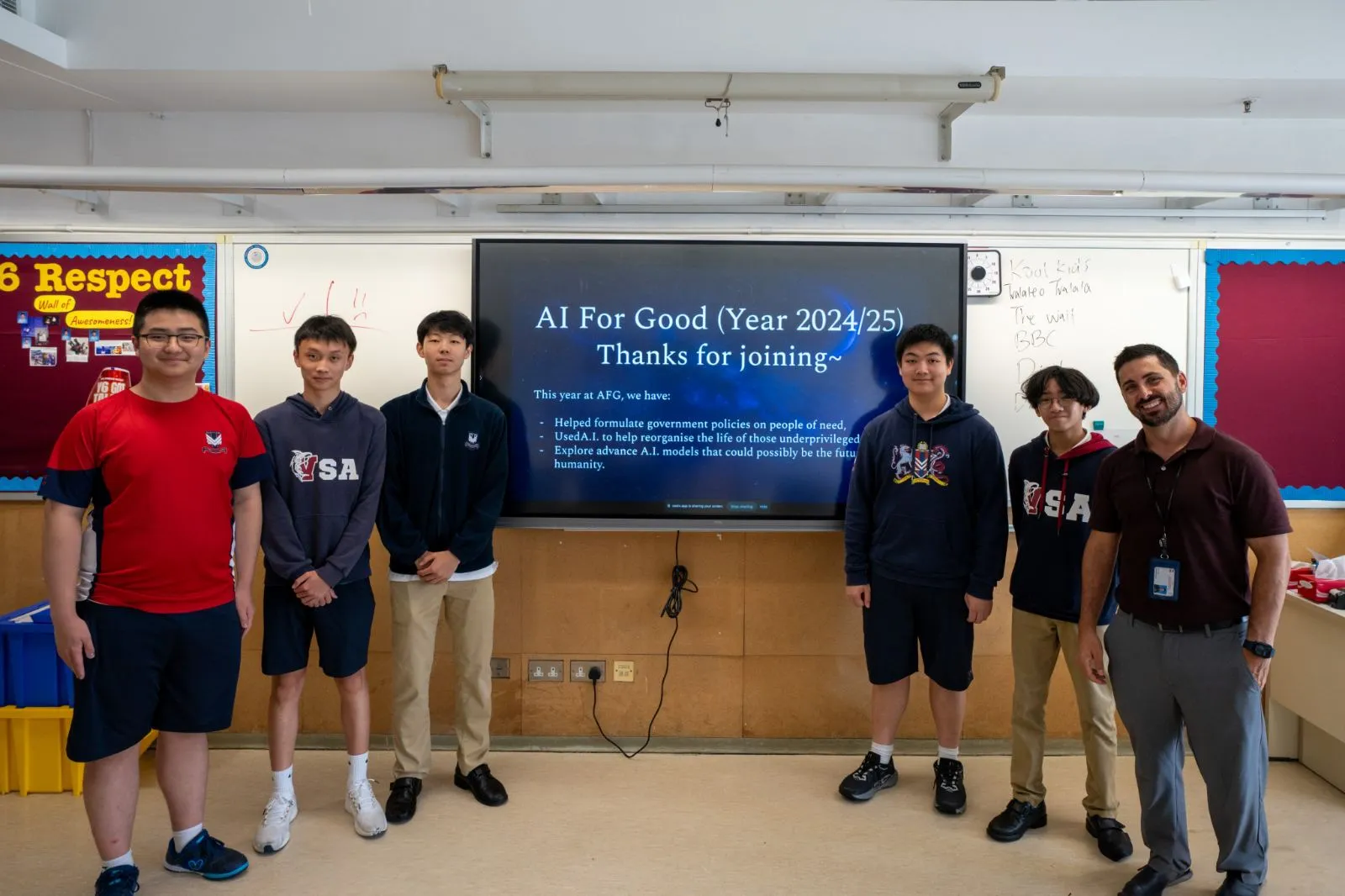
  • Tutors and students at the close of the 2024/25 sessions, in front of a slide thanking everyone for joining.
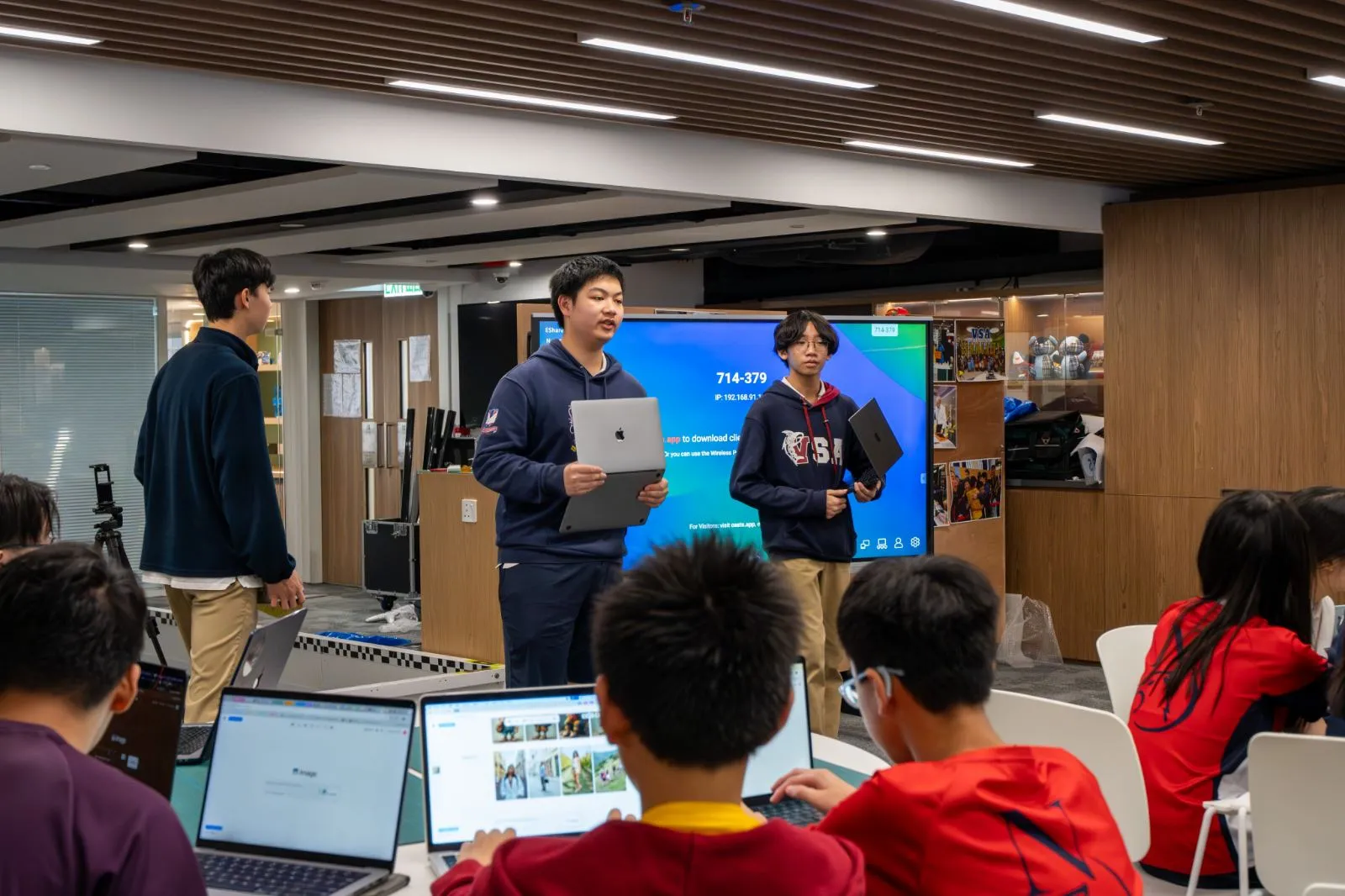
  • Two tutors present to students working at laptops during a 2024/25 session.
  • A tutor presents a worked example on screen, showing how an AI image tool transforms one picture into another.
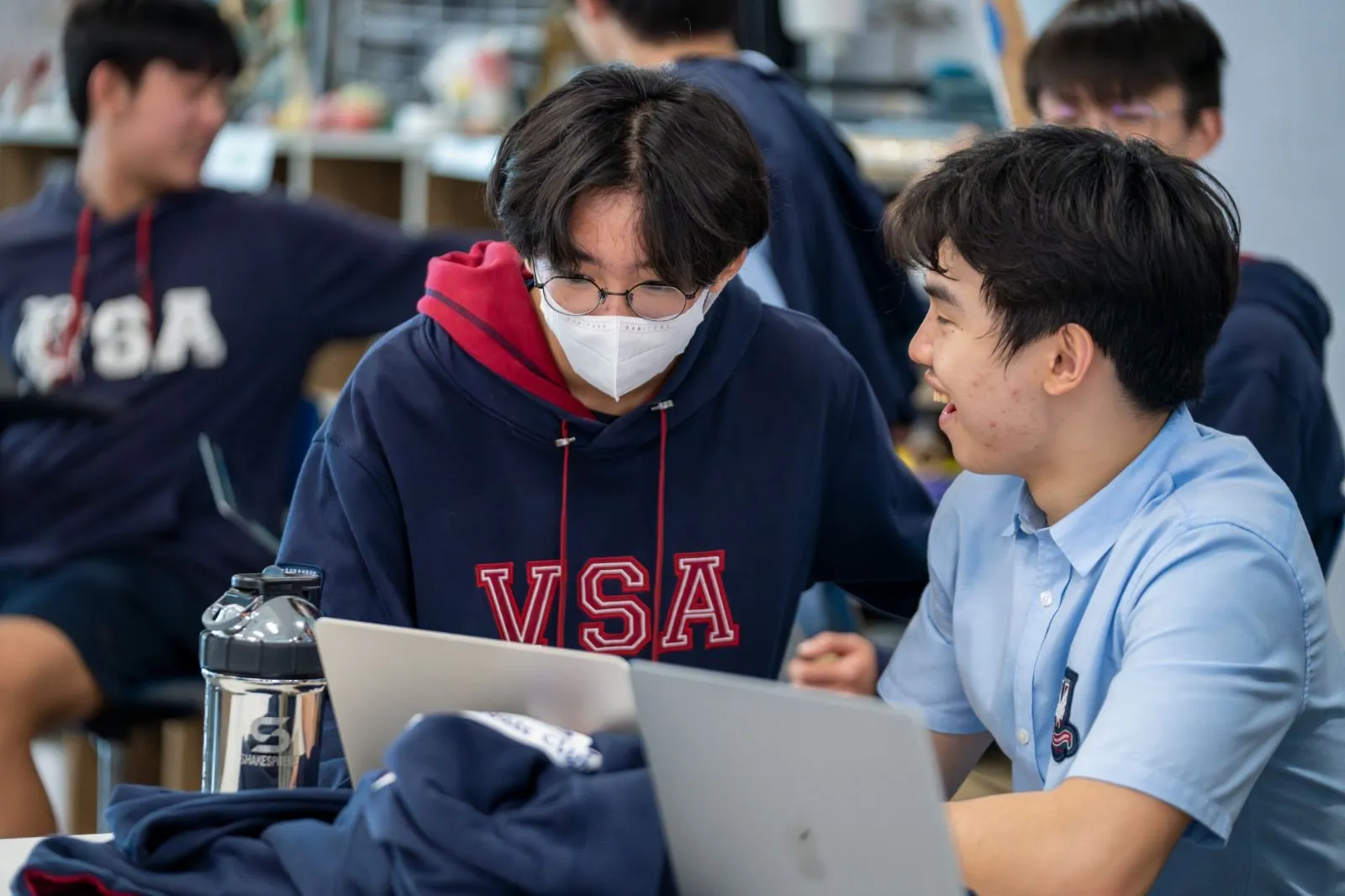
  • A tutor leans in to help two students working together at a laptop.
  • A tutor helps a younger student working at a laptop.
  • A tutor works through a task beside a student at a laptop.

2025–26

Teaching local children what AI can make better, and how to spot and avoid the ways it gets misused.

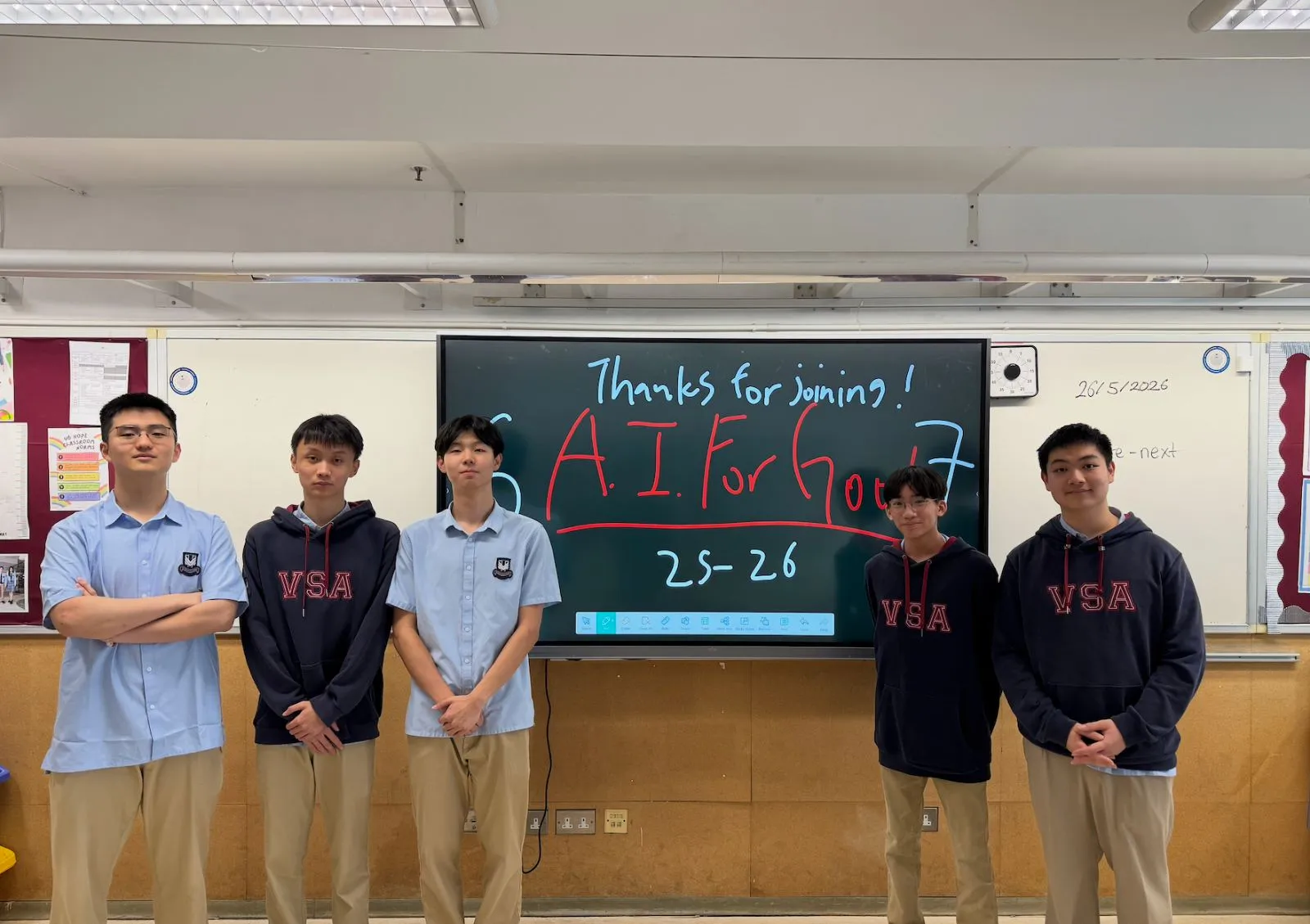
  • Tutors in front of a board reading "Thanks for joining — A.I. For Good 25–26" at the end of the year.
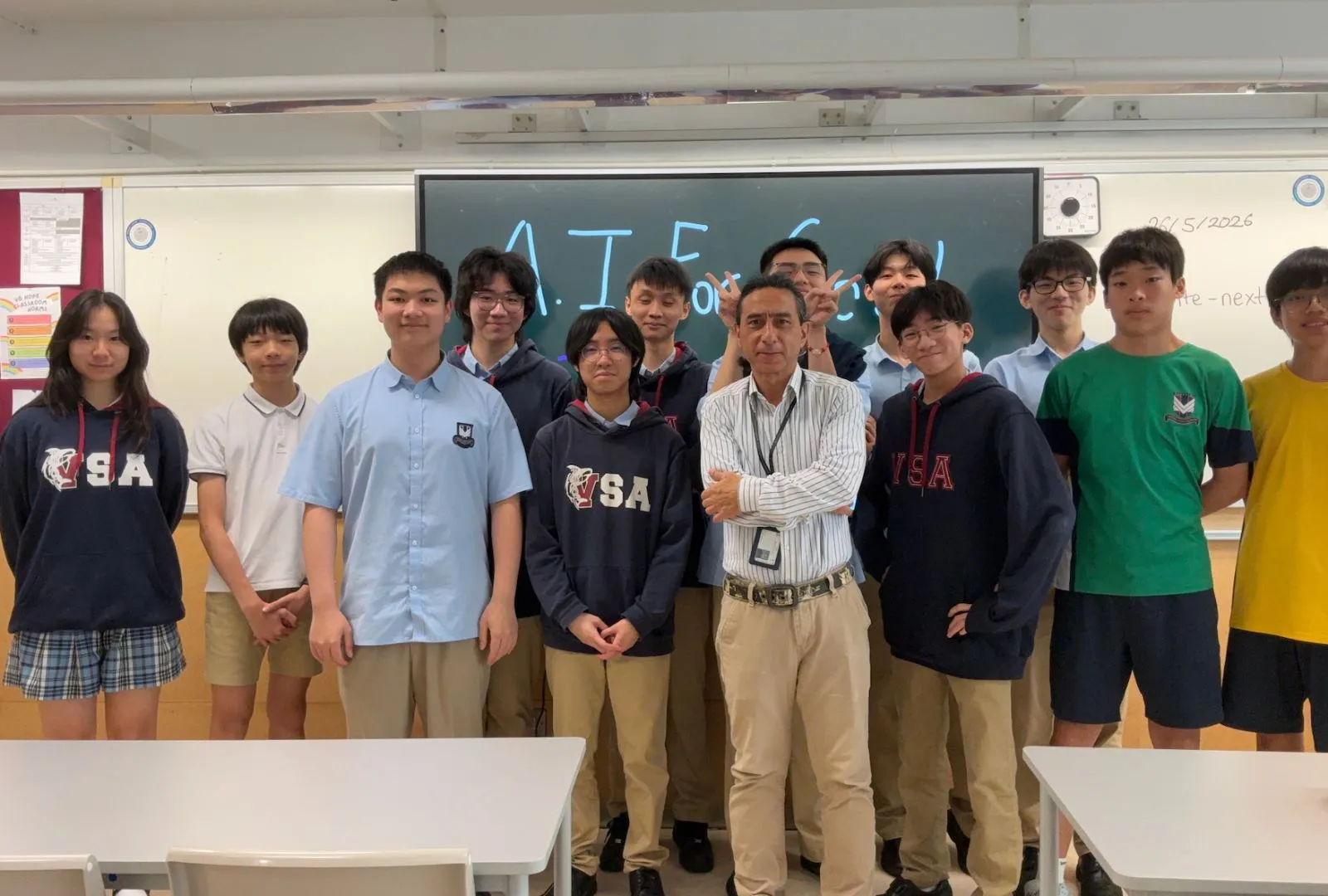
  • The 2025/26 group of students and tutors together in the classroom.
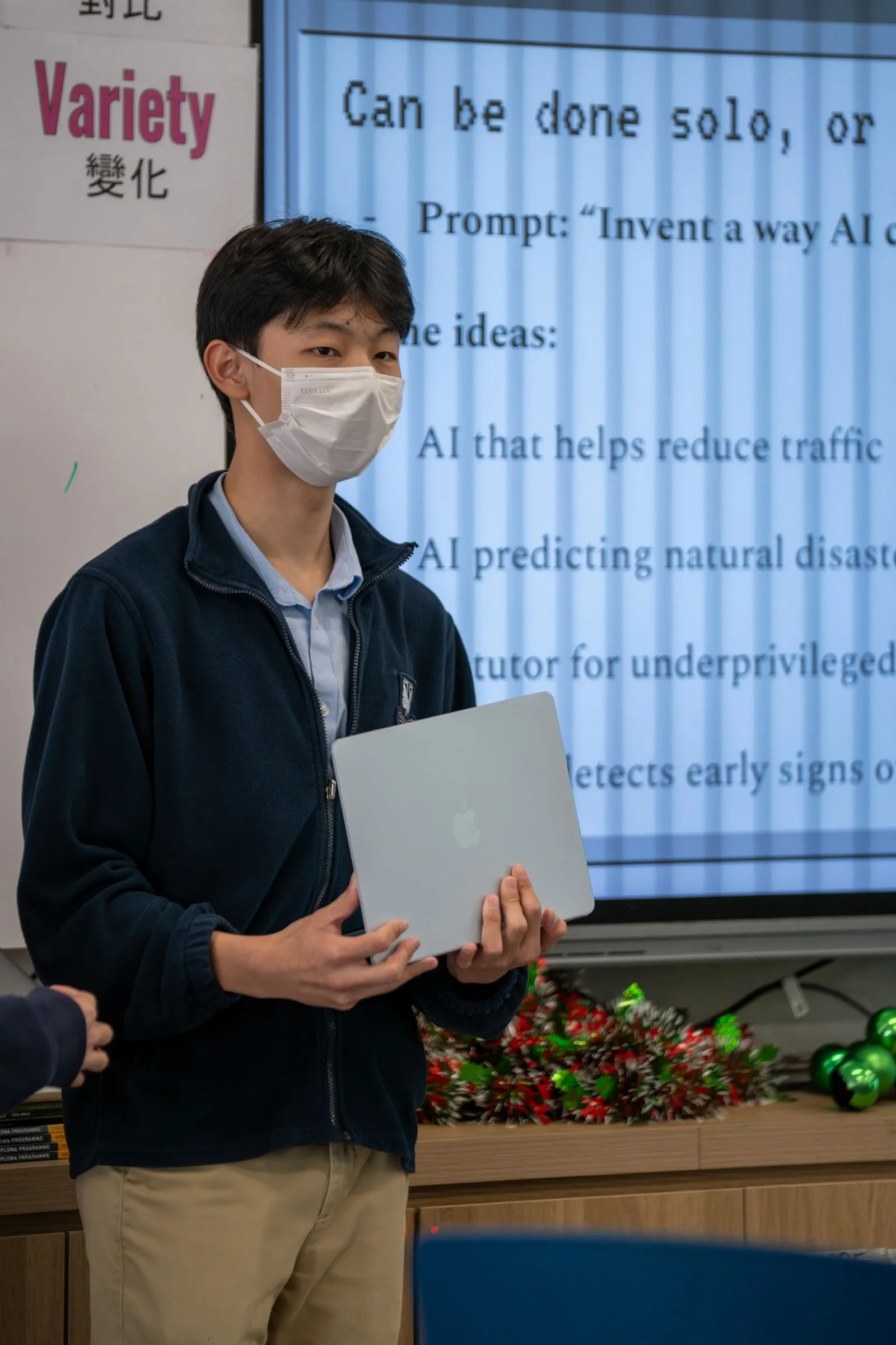
  • A tutor presents examples of what AI can be used for, including reducing traffic, predicting natural disasters, and tutoring underprivileged students.
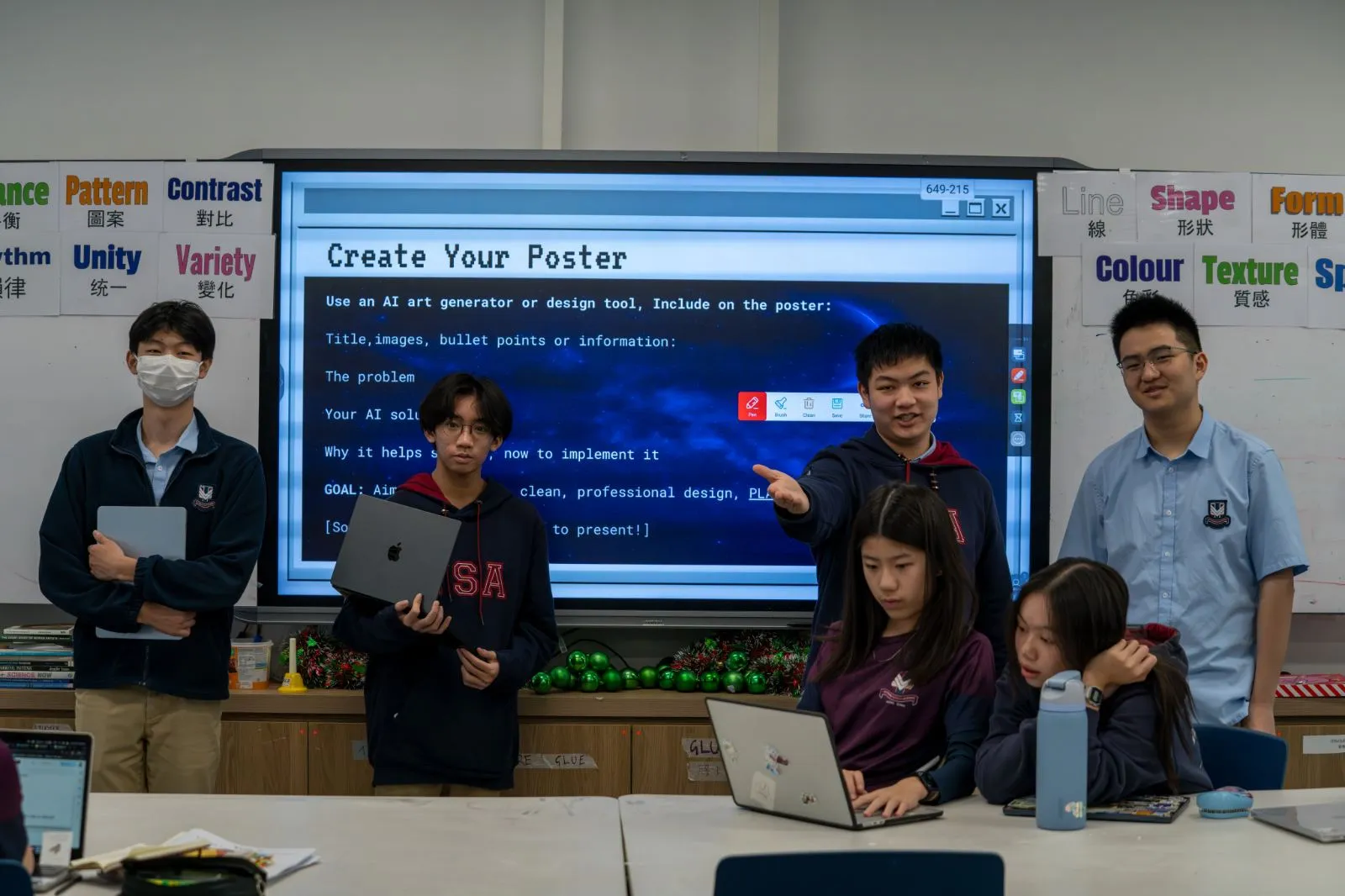
  • Students build posters setting out a problem, an AI solution, and how it would be implemented.
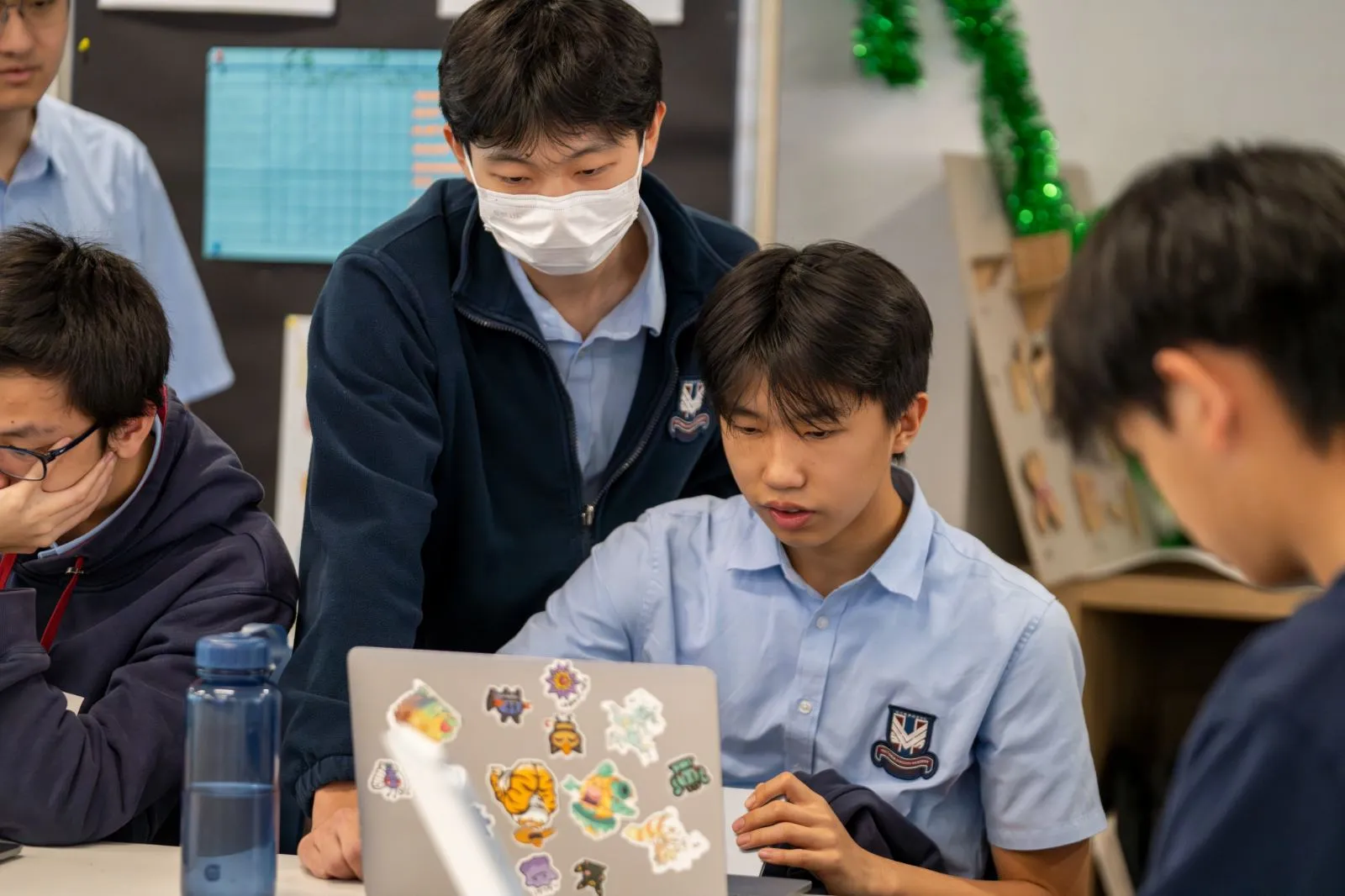
  • A tutor talks a student through their work at a laptop.
  • A tutor helps a student at a laptop during a session.

Bring us to your school

If you run a primary school, community centre or children's programme and would like free tutoring for your students, get in touch.

Contact us

Become a tutor

If you're a secondary student who wants to teach, we'll train you first.

Sign up